Your story matters, even if you’re not a writer
OPINION
By Richard Evans, President Whitsundays Writers Festival
Have you ever thought about writing down your life story, only to dismiss the idea because you’re not a writer?
Perhaps you left school early, struggled with English, or believe your life isn’t interesting enough to deserve a book.
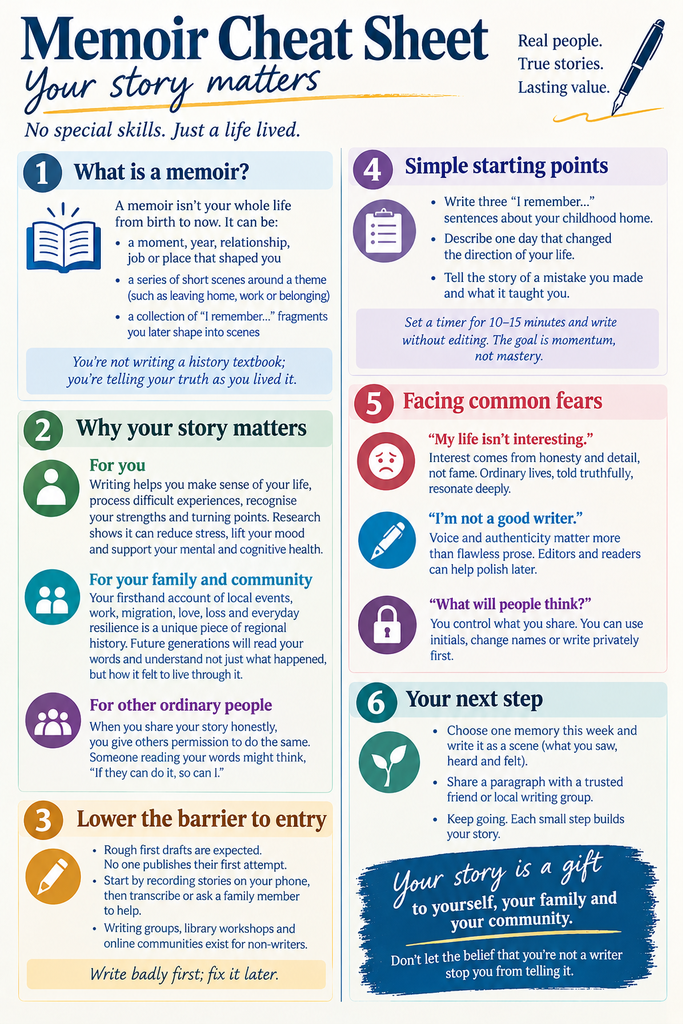
Here’s the thing. You don’t need to be a writer to tell your story. You just need a life you’ve lived and a willingness to remember it honestly.
That’s what memoir is. It isn’t a history textbook, and you needn’t cover every year since birth. You might write about one important year, a relationship that changed you, a job that tested you, or the day you left home.
Your story doesn’t have to be extraordinary. Often the most powerful stories come from ordinary people explaining what everyday life was like in another time.
Think about the history held by people in our own region. The cane farms, fishing boats, mines and small businesses. The families who arrived from overseas, the hardships people endured and the communities they built. Official records tell us what happened. Personal memories tell us what it felt like to be there.
Your story is part of that history. And if you don’t record it, nobody will. One day your children, grandchildren or someone researching the region will be grateful you did.
Writing can also help you understand your own life. Looking back, you may discover that events you once took for granted shaped you more than you realised.
So, where do you begin?
Keep it simple. Write three sentences starting with “I remember…” Think about your childhood home, your first job or a day that changed your life. Use a photograph as a prompt. Set a timer for ten minutes and write without stopping to fix spelling or grammar.
If writing feels difficult, tell the story into your phone and ask someone to help turn the recording into words. Your local library or writing group can also help.
And forget the excuses. You don’t need perfect grammar. You can change names, keep your writing private or share only what feels comfortable. The first draft is allowed to be rough. Write badly first, fix it afterwards.
So this week, choose one memory and describe what you saw, heard and felt. Ten minutes is enough.
Your story is a gift to yourself, your family and your community. Nobody else can tell it quite the way you can. Start today.